The main plot of the episode is The Doctor, Amy and Rory being kidnapped and forced to go the the Dalek Asylum to turn off a forcefield. There are also two subplots which are intertwined with the main plot. The first subplot is Amy and Rory's relationship as they are in the process of getting divorced.
 This is mentioned frequently throughout the episode and The Doctor is desperate to help them get back together. He does achieve this by making them realise their love for each other.
 The second subplot is about Oswin Oswald, a mysterious woman who seems to be able to control most aspects of the Asylum and hack into Dalek technology, which even The Doctor can't do. This subplot is also resolved by the end of the episode as we discover that Oswin was fully converted into a Dalek, hence why she can hack into the Asylum.
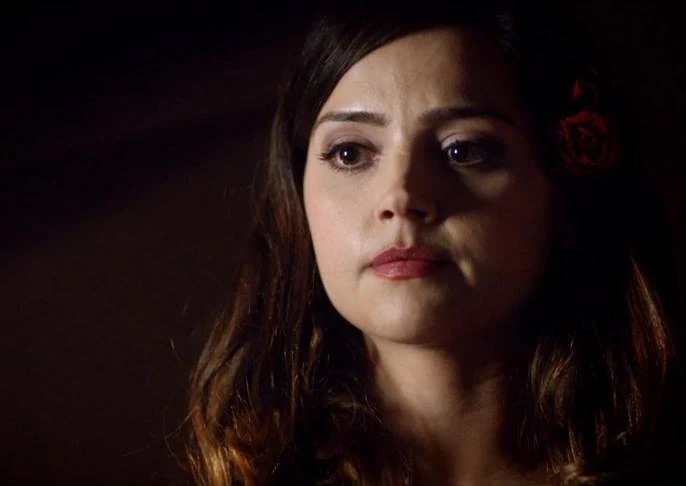 She has created a world in her mind where she is a human because the reality was too horrible for her to deal with. Both of these subplots are not just part of this episode as Amy and Rory will appear in future episodes and the actress who played Oswin (Jenna-Louise Coleman) has been confirmed to appear as The Doctor's companion in the Christmas special. Asylum of the Daleks is a one-off episode but is part of an ongoing drama serial. Some elements of the episode will be seen in later episodes, for example The Doctor, Amy and Rory. However the plot of this episode does not directly relate to any other episode and is a completely one-off story in an ongoing drama serial.
Representation

The Doctor is represented as an outsider, his odd dress sense and the way he speaks is intended to show that he is not one of us. He is also represented as being highly intelligent and capable of many things that most humans wouldn't be because of his intelligence and his sonic screwdriver. He often shows a childlike side and has funny interactions with other characters, however he does have a darker side and is capable of showing anger. This is because he has been fighting aliens such as the Daleks for hundreds of years. The companions, Amy and Rory, allow the audience to experience the adventure and understand what is happening because they give a reason for The Doctor to explain things.
 Amy is represented as being feisty, strong and independent. This is shown by having her dresses in black leather. There is also a photoshoot scene where there are a lot of close-up shots of Amy. This shows that Amy is very sexy. She is also shown to love Rory very much and finds it hard that they are filing for divorce. However she tries to hide these feelings and keep to her feisty persona. The divorce is a big sub-plot of the episode so these feelings are very important.
 Rory is represented as being a bit of a comic relief at some points during the episode. Some of the lines that he says are intended to be funny and possibly make him seem unimportant. However he is shown to be a very valuable companion to The Doctor. He is represented as being very much in love with Amy, despite the fact that they are in the process of getting divorced.
 Mise en scene
As Doctor Who is a sci-fi programme, most episodes take place on different planets. Towards the beginning of the episode, The Doctor finds himself on Skaro. The sky is red which clearly tells the audience that this is an alien planet. As mentioned before, The Doctor's outfit is meant to be uncool but The Doctor thinks that it is cool which shows that he is an outsider (alien). When the Daleks blow up, there is a large explosion which would originally have been created using pyrotechnics and then expanded through SFX. When The Doctor, Amy and Rory are being sent to the asylum, the beam would have been created entirely using SFX however the actors may have been filmed using green screens. In the parliament of the Daleks, there would likely have been a few Daleks on camera and then they would have been duplicated in post-production.
Sound

The music gets faster paced to indicate danger or something dramatic, this gives the audience prior knowledge of the event and therefore creates tension for them. Some sounds heard in the episode, such as the banging on the sides of the ship would have been added in in post-production however it does relate to what is happening in the shot therefore it is diegetic sound. These would have been put in post-production so the sound will not get
Titles

The opening credits of Doctor Who are created entirely through CGI. The episode title and names of the three main actors are shown over a sequence of the tardis travelling through the time vortex. The opening sequence is quite fast paced because the names of the three main actors and the name of the show fade in and then fade out again. During the closing credits, the character names appear first but the actors names are larger. This is because the audience are more likely to know the character name so they can identify the actor they want because the character name is shown first.
Camerawork and Editing

The transition between shots differs depending on the effect that the crew want to create. When something dramatic or exciting is happening, there are quick cuts and when there is little action the shots are slower and more spaced out. A variety of shot types are used in the episode, for example long shots. These are used to allow the audience to see more in one shot than they would with a close-up shot or a medium shot. Close-ups are used to show the reaction of a character and to make sure that the audience are focused on the character. The camera pans around all of the Daleks to emphasise how many of them there is. High Angle shots are often used to show lack of power. An example of this is when Rory is falling towards the Dalek Asylum. This shows that at that point he is not very powerful and is also probably worried or afraid. If there is an action scene then the camera is often handheld and shaky and there are quick cuts between shots. However when there is a calmer scene such as Amy seeing the Daleks as people the camera is more steady and there is slower movement. Some of these shots would have been slowed down in post-production. All of these things happening together create the sense of hallucinating. Abrupt cuts between shots can be used to show that a shift in time or place has occured. This is shown when there is a cut from The Doctor being captured on Skaro to Amy being captured on Earth.
Genre
Doctor Who is clearly a Sci-Fi programme. The inclusion of space and time travel, spaceships, life forms from other planets and advanced technology such as the forcefield or the Doctor's sonic screwdriver all point towards the Sci-Fi genre.
Target Audience
Doctor Who is a family show with various elements that would appeal to people of different ages. The lack of swearing and the fact that most of the violence is only implied means that children can watch and enjoy the show. Teenagers and adults can enjoy the very subtle, more mature jokes and the sex appeal of some of the characters (most often this is the companion and in this episode Oswin Oswald as well). There are also emotionally driven storylines which they can see carrying on throughout a series.