Thursday, 20 December 2012
Source Code
The film begins with a man on a train, hearing explosions. There is a loud train horn and he suddenly wakens. It is clear to the audience that he does not know where he is. This creates an enigma and a sense of mystery for not only the audience but the character as well. This allows the audience to learn things at the same time as the character (Capt. Colter Stevens). There is an ominous musical soundtrack playing as Colter tries to work out what is happening. Everyone around him remains calm which keeps the focus on him. The scene then calms down and Christina, who appears to be friends with Sean Fentress (the man that everyone else sees Colter Stevens as) tells him that 'everything is going to be ok'. Out of nowhere, there is an explosion and the audience see the train being derailed. Before the explosion, there are a few quick cuts which build the pace of the scene and signify the impending danger. There is a juxtaposition between the pace of the scene and the calm dialogue ('everything is going to be ok').

Casino Royale
Casino Royale Opening Sequence
The opening sequence is black and white, this is used to show that this current scene is set in the past as James Bond earns his 00 status, and to distinguish it from the rest of the film, which is set at a later point when he is well into his 00 career. An enigma is created because we are not aware of the characters background stories, and what sort of part they portray during the film. Suspense is shown during this opening sequence, its shown during the start when its extremely calm and quiet, the man walks to his office unaware of anything about to happen, however with the use of different camera angles, it gives the audience a feeling that something is about to happen. There is ambient sound during the start of the scene, this the makes the scene calm, then in the office we get the dialogue, which gives the audience information such as the fact that the first man has been selling MI6 secrets. There is then a flashback to James killing the man's colleague. The gunshot leads into the music and opening titles. In the scene we are introduced to James Bond and
The opening sequence is black and white, this is used to show that this current scene is set in the past as James Bond earns his 00 status, and to distinguish it from the rest of the film, which is set at a later point when he is well into his 00 career. An enigma is created because we are not aware of the characters background stories, and what sort of part they portray during the film. Suspense is shown during this opening sequence, its shown during the start when its extremely calm and quiet, the man walks to his office unaware of anything about to happen, however with the use of different camera angles, it gives the audience a feeling that something is about to happen. There is ambient sound during the start of the scene, this the makes the scene calm, then in the office we get the dialogue, which gives the audience information such as the fact that the first man has been selling MI6 secrets. There is then a flashback to James killing the man's colleague. The gunshot leads into the music and opening titles. In the scene we are introduced to James Bond and
The Dark Knight
Suspense is built up during the start of the scene, where there is a slow ticking sound, and music over the top, which is quiet but noticeable, and adds to the suspense of what's about to happen. There is a wide range of different camera angles used, to give the audience an insight to what is actually going on, and so that they can get a thorough understanding of the plot. There is a quick introduction to lot's of different characters, however, most of them are quickly killed off as it is revealed that the joker, who they kept referring to and believed to be simply organizing the bank robbery from afar, has ordered each of them to kill another while he takes all of the money. The pace of the scene is very quick as in the space of three minutes, 5 people are killed and we are introduced to The Joker who is the main antagonist of the film. The quick paced action scene is a indicator of what is to come throughout the film. As all of the bank robbers are wearing masks, there is an enigma created. The Joker takes off his mask to reveal that he is wearing makeup similar to the mask anyway.
Quantum of Solace
The opening scene in James Bond Quantum of solace, starts in the middle of the ocean, with the camera then zooming into the hillside, over the top of this, a fast paced, suspense piece of music is played which indicates something is currently happening, or about to happen. The scene then switches to 4 different camera angles of a moving aston martin, giving the audience a first sight of bond, and indicating that some action is about to take place. The shot then quickly changes back to the camera zooming in on the mountain side, and then changes to 4 different camera angles of a moving alfa romeo, giving the audience a sight of James Bond's enemy, this indicates something is obviously about to happen between the two, the camera then switches back to the mountain shot, then back to bond, we see his car again, and for the first time, a glimpse of his face, the camera then switches back to the mountain shot, and the musics pace then suddenly quickens, and starts getting much louder, the mountain shot no longer remains, and it goes straight into James Bond changing gear, and then the enemy firing bullets at him.
Monday, 10 December 2012

Monday, 19 November 2012
Legal and Ethical Issues
Copyright is a legal concept which gives the original creator of a piece of work exclusive rights to the work, usually for a limited time before it is placed in the public domain. Generally speaking it is the right to copy the work however it also gives the creator the right to be credited for their work and to choose who may perform the work, adapt it and financially gain from it.
Defamation (also known as calumny, vilification, traducement and slander) is the act of making a statement which may give an individual, group, company, product or religion a negative or inferior image. This can be also any disparaging statement made by one person about another, which is communicated or published, whether true or false, depending on legal state.
Certification is the process of deciding what age group a TV show or film should be shown to. Examples of certificates are U, PG, 12, 15 and 18.
When making a TV show or film, the producers must take into account all of the potential issues they could face. For example, The One Show, Doctor Who and High Crimes must make sure that there is no copyrighted material in the product. The most likely material to be copyrighted is music so they must make sure that they have permission to use a certain piece of music in the show/film. Any work must be original in order to receive copyright protection. Copyright can be placed on websites, written work (including software and databases), theatre (dance and mime can get protection as well), Music, artistic work (including photos), spoken word and performers and TV & film. You must gain permission before using any of these mediums. Often, music will have multiple copyright protections. The composer will have the copyright to the song, the lyricist will own literary rights to the lyrics as they are considered to be literary work. The producer will own the copyright to the recorded track.
As well as copyright, there are other, more specific, legal and ethical issues for film or TV producers to consider. The One Show would be affected by the representation of tribal people. If they were to film a tribe then they would have to make sure to gain the permission of the tribe and ensure that the tribe understand that they will be shown on TV. Another thing that the Producers must consider is accuracy. The BBC Editorial Guidelines state that where possible material should be gathered from first hand sources and that facts should be checked and then cross checked. The producers must not represent the tribe in a way that is nor true to their daily life which would in turn be misleading the audience. The One Show would also have to take care to be impartial when talking about subjects that could potentially be controversial. As Doctor Who is broadcast before 9pm (the watershed) and is aimed at people of all ages, the producers must take into consideration the level of violent and sexual content as well as any bad language. There is no legal constraints to enforce the watershed but they are in the BBC Editorial Guidelines and most television companies keep to the guidelines.
Although High Crimes is an American film, it is still subject to the BBFC (British Board of Film Compassion. The BBFC is a non-governmental organisation, funded by the film industry and responsible for the national classification and censorship of films within the UK. To be shown in the UK, High Crimes would have to be classified by the BBFC. The current guidelines of the BBFC identify certain areas of a film that must be considered when awarding a certificate or making cuts to a film. These include violence, sexual content, actions that can be easily imitated by children, horror/disturbing content, drugs and discrimination. High Crimes was certificated a 12. This is likely because of violence, profanities and sexual content. Some films, when released on DVD, receive a higher certificate because they include trailers of films with a higher certificate. The BBFC do not have any effect on the TV broadcast but they will give the DVD release a certification. With the exception of series 5, every full series DVD release of Doctor Who has been given a 12 certificate.
Defamation (also known as calumny, vilification, traducement and slander) is the act of making a statement which may give an individual, group, company, product or religion a negative or inferior image. This can be also any disparaging statement made by one person about another, which is communicated or published, whether true or false, depending on legal state.
Certification is the process of deciding what age group a TV show or film should be shown to. Examples of certificates are U, PG, 12, 15 and 18.
When making a TV show or film, the producers must take into account all of the potential issues they could face. For example, The One Show, Doctor Who and High Crimes must make sure that there is no copyrighted material in the product. The most likely material to be copyrighted is music so they must make sure that they have permission to use a certain piece of music in the show/film. Any work must be original in order to receive copyright protection. Copyright can be placed on websites, written work (including software and databases), theatre (dance and mime can get protection as well), Music, artistic work (including photos), spoken word and performers and TV & film. You must gain permission before using any of these mediums. Often, music will have multiple copyright protections. The composer will have the copyright to the song, the lyricist will own literary rights to the lyrics as they are considered to be literary work. The producer will own the copyright to the recorded track.
As well as copyright, there are other, more specific, legal and ethical issues for film or TV producers to consider. The One Show would be affected by the representation of tribal people. If they were to film a tribe then they would have to make sure to gain the permission of the tribe and ensure that the tribe understand that they will be shown on TV. Another thing that the Producers must consider is accuracy. The BBC Editorial Guidelines state that where possible material should be gathered from first hand sources and that facts should be checked and then cross checked. The producers must not represent the tribe in a way that is nor true to their daily life which would in turn be misleading the audience. The One Show would also have to take care to be impartial when talking about subjects that could potentially be controversial. As Doctor Who is broadcast before 9pm (the watershed) and is aimed at people of all ages, the producers must take into consideration the level of violent and sexual content as well as any bad language. There is no legal constraints to enforce the watershed but they are in the BBC Editorial Guidelines and most television companies keep to the guidelines.
Although High Crimes is an American film, it is still subject to the BBFC (British Board of Film Compassion. The BBFC is a non-governmental organisation, funded by the film industry and responsible for the national classification and censorship of films within the UK. To be shown in the UK, High Crimes would have to be classified by the BBFC. The current guidelines of the BBFC identify certain areas of a film that must be considered when awarding a certificate or making cuts to a film. These include violence, sexual content, actions that can be easily imitated by children, horror/disturbing content, drugs and discrimination. High Crimes was certificated a 12. This is likely because of violence, profanities and sexual content. Some films, when released on DVD, receive a higher certificate because they include trailers of films with a higher certificate. The BBFC do not have any effect on the TV broadcast but they will give the DVD release a certification. With the exception of series 5, every full series DVD release of Doctor Who has been given a 12 certificate.
Thursday, 15 November 2012

Thursday, 8 November 2012
Film Job Functions
stunts:
Unit Production Manager: The UPM is the title for an on-set executive responsible for the administration of a production; especially a film production. A UPM is usually hired by a film producer or television producer,
and is responsible for managing the production and regulating the costs
of delivering the expected film or television show on budget at the end
of principal photography. The UPM does not have any direct responsibilities with the creative
direction of the film's narrative. He or she is to support the
director's artistic vision on a daily physical production level. Before principal photography begins both the producer and UPM work to
secure as many of the production elements as possible, including a
workable schedule and budget. Like nearly all members of a film crew, UPMs will typically remain on
the shoot until the end of principal photography and can return if there
are any reshoots. It is not atypical for a UPM to work 80-100 (or more)
hours per week while a film is in production.
Art Director: An Art Director will work directly below the production designer in terms of the hierarchical structure of a film art department. A large part of their duties include the administrative aspects of the art department. They are responsible for assigning tasks to personnel
such as the Art Department Coordinator, and the Leadman, keeping track
of the art department budget and scheduling (i.e. Prep/Wrap Schedule) as
well as overall quality control.
Set Dressing Buyer: A Set Dressing Buyer will buy the furnishings, wallpaper, lighting fixtures, and many of the other objects that will be seen in the film.
Storyboard Artist: A Storyboard Artist specialises in creating storyboards for advertising agencies and film productions. A storyboard artist is able to visualize any stories using quick
sketches on paper at any moment. Quick pencil drawings and marker
renderings are two of the most common traditional techniques, although
nowadays Flash, Photoshop,
and other storyboard applications are gradually taking over. The
digital camera is one of the latest techniques in creating storyboards. A storyboard artist is also known as an illustrator or visualizer. They are mostly freelance artists, typically hired by art directors and film directors. Some frequently used drawing applications are Corel Painter and Adobe
Photoshop. Many storyboard artists nowadays begin and finish their work
on computers using software and digital pencils like Wacom (Graphics tablet). In film, a storyboard artist is hired at the beginning of a project.
When a storyboard artist is hired by a motion picture company, the
artist must break down the scenes of the script into shots which can be
filmed. This is done under the supervision of the film's director in
order to ensure the director's vision from the start of the project.
Therefore, it can be helpful for the storyboard artist to know the
mechanics of filmmaking when assisting the director. As the production
proceeds, the storyboards are presented to the cinematographer who is
then responsible for bringing that vision to the screen. Film production
companies may also hire a storyboard artist to create polished
presentation-style storyboards (which might also include sound) which
can be used by an executive producer to raise the money to create the
film.
Steadicam Operator: Steadicam Operators are responsible for the technical set up of the
Steadicam system and for balancing the camera on it. They liaise with
director, director of photography (DoP) and actors to set up and perform
the required shots. They also work with the 1st assistant camera to
ensure that shots are in focus, and with the 1st assistant director to
make sure that the choreography of the shot runs smoothly. Steadicam Operators are specialists within the camera department and may
be hired on a daily basis to perform specific shots within a scene, or
employed as camera operators who specialize in Steadicam.
Camera Loader: A Clapper Loader is part of a film crew, whose main functions are that of loading the raw film stock into camera magazines, operating the clapperboard
(slate) at the beginning of each take, marking the actors as necessary,
and maintaining all records and paperwork for the camera department.
Boom: A Boom operator is an assistant of the production sound mixer. The principal responsibility of the boom operator is microphone
placement, usually using a boom pole with a microphone
attached to the end, their aim being to hold the microphone as close to
the actors or action as possible without allowing the microphone or boom
to enter the camera's frame.
Script Supervisor: A script supervisor (also called continuity supervisor) is a member of a film crew responsible for maintaining the motion picture's internal continuity and for recording the production unit's daily progress in shooting the film's screenplay. The script supervisor is the editor's and writer's representative on
set, as well as being the right hand aide to the director and the
director of photography. It is the script supervisor's job to make sure
that at the end of the day the film can be cut together. In that sense,
they back up every department, monitor the script during shooting and
make sure that errors in continuity do not occur that would prevent the
film from being able to be compiled in the editing room.
Chief Lighting Technician: Lighting Technicians are involved with rigging stage and location sets and controlling artificial, electric lights for film production. In film productions lighting technicians work under the direction of the Gaffer or Chief
Lighting Technician whom takes their direction from the cinematographer
Rigging Gaffer: The Rigging Gaffer is a member of the electrics or lighting department who works under the direction of the gaffer and the DP. They have a
crew of set lighting technicians and set wiremen, including a best boy,
and are generally responsible for pre-lighting on set. Ahead of principal
photography on a new scene or location, the Rigging Gaffer arrives to
survey the site and plan installation as per the gaffer’s instruction.
This person supervises the crew in unloading the lighting truck and
installing cable, rigging equipment, and lighting instruments according
to the gaffer’s design. This is only preparatory work, as the primary
lighting crew will follow to focus lights and refine the look, as will
the grips install gobos and other accessories. Essentially, the Rigging Gaffer ensures that all gear is in working order, in place, and ready to
be locked down upon arrival of the gaffer.
Best Boy: In a film crew there are two kinds of best boy. These are best boy electric and best boy grip. They are assistants to their department heads, the gaffer and the key grip, respectively.[1] In short, the best boy acts as the foreman for his/her department. Best boys are responsible for the day-to-day operation of the lighting
or grip department. Their many responsibilities include the hiring,
scheduling, and management of crew; the ordering, inventory, and
returning of equipment; overseeing workplace safety and maintaining
discipline within their department; completing timecards and other
paperwork; stocking of expendables; loading and unloading production
trucks; planning and implementing the lighting or rigging of locations
and/or sound stages; coordinating with rigging crews and additional
photography units (if applicable); handling relations with the other
production departments; overseeing the application of union rules (where
relevant); and serving as the day-to-day representative of the
department with the Unit Production Manager and Coordinator of the film.
Key Grip: The key grip is the head of the grip
department and chief rigging technician on the set. Using light, the
key grip is in charge of the shadows of light, the movement of the
camera, the placing of cameras on any stationary, moving, flying, or
floating surface. As a supervisor, the key grip directs the crew of grips, many with
specialized skills such as dolly grips, crane operators, or special
equipment operators.
High Crimes Notes
Narrative: Tom Kubik and his wife Claire move to Marin County and find their idyllic lifestyle. During a shopping spree, Tom is captured by the FBI and charged with the murder of 9 peasants. Claire then discovers that his real name is Ronald Chapman and that he was a covert military operative serving in the United States Marine Corps and has been on the run for the past fourteen years. She decides to defend her husband and hires Charlie Grimes (Morgan Freeman) as well.
Representation: Claire is shown to be a strong, independent woman who deeply loves her husband and will go against the military in order to prove his innocence. Throughout the film she is usually dressed formally. This, as well as conversations talking about her being the best lawyer, emphasise these aspects of her. In contrast, after the car crash she is shown to be unable to move and distraught at the loss of her unborn baby. The next scene shows her wearing casual clothing, suggesting a loss of power. Tom/Ronald Chapman is represented in completely different ways throughout the film. He is portrayed as being innocent after his arrest and the way he acts towards Claire shows a very loving relationship between the two of them. After it is revealed that he is being accused of murders, he becomes a much darker character. This is shown in a scene when he is standing in the doorway behind Claire. Later he appears to be very unstable as he attacks Claire and his facial expressions as he is planning to kill her emphasise his psychotic nature. Charlie Grimes is represented very differently from the other characters in the film. He is not particularly well dressed and achieves his aims through unorthodox methods.
Camerawork: When someone is talking, close-ups are used to make sure that the audiences focuses on them. If someone is being watched then the audience see from the watchers persepctive. The camera follows the person so the audience know that they are being watched. When Claire has a car crash, there is a cut to a scene with her in the hospital. This is representative of what she would have seen so the audience are seeing things from her point of view. Another example of what the audience seeing representing how a character is feeling is when the man is being strangled and the screen becomes blurry. This relates to the fact that he is feeling disorientated. Long shots are used to allow the audience to see many things happening in one shot so there does not have to be lots of cuts between shots.
Mise en Scene: Many of the characters in the film wear military uniform. This is used to show authority and power. Suits are worn to give a character a sense of professionalism. Towards the start of the film, there is lots of bright lighting. However the lighting becomes darker throughout the film. This relates to the dark tone of the film.
Sound: The film begins with slow, melodic music in order to disguise the darker nature of the plot. The music becomes faster to build up tension before a fight or action scene. This builds tension because it acts as a signifier for the audience. If a scene is emotional and upsetting, slower music is used in order to keep the audience focused on what is happening in the scene.
Target Audience:The target audience of this film is likely to be adults from around the ages of 25 to 40. This is because it is more of a mystery thriller which, although younger people may enjoy, does not contain as much action as many younger people would like.

Camerawork: When someone is talking, close-ups are used to make sure that the audiences focuses on them. If someone is being watched then the audience see from the watchers persepctive. The camera follows the person so the audience know that they are being watched. When Claire has a car crash, there is a cut to a scene with her in the hospital. This is representative of what she would have seen so the audience are seeing things from her point of view. Another example of what the audience seeing representing how a character is feeling is when the man is being strangled and the screen becomes blurry. This relates to the fact that he is feeling disorientated. Long shots are used to allow the audience to see many things happening in one shot so there does not have to be lots of cuts between shots.
Mise en Scene: Many of the characters in the film wear military uniform. This is used to show authority and power. Suits are worn to give a character a sense of professionalism. Towards the start of the film, there is lots of bright lighting. However the lighting becomes darker throughout the film. This relates to the dark tone of the film.
Sound: The film begins with slow, melodic music in order to disguise the darker nature of the plot. The music becomes faster to build up tension before a fight or action scene. This builds tension because it acts as a signifier for the audience. If a scene is emotional and upsetting, slower music is used in order to keep the audience focused on what is happening in the scene.
Target Audience:The target audience of this film is likely to be adults from around the ages of 25 to 40. This is because it is more of a mystery thriller which, although younger people may enjoy, does not contain as much action as many younger people would like.

Monday, 8 October 2012
Doctor Who Analysis: Asylum of the Daleks
Narrative
The main plot of the episode is The Doctor, Amy and Rory being kidnapped and forced to go the the Dalek Asylum to turn off a forcefield. There are also two subplots which are intertwined with the main plot. The first subplot is Amy and Rory's relationship as they are in the process of getting divorced.
 This is mentioned frequently throughout the episode and The Doctor is desperate to help them get back together. He does achieve this by making them realise their love for each other.
The second subplot is about Oswin Oswald, a mysterious woman who seems to be able to control most aspects of the Asylum and hack into Dalek technology, which even The Doctor can't do. This subplot is also resolved by the end of the episode as we discover that Oswin was fully converted into a Dalek, hence why she can hack into the Asylum.
 She has created a world in her mind where she is a human because the reality was too horrible for her to deal with. Both of these subplots are not just part of this episode as Amy and Rory will appear in future episodes and the actress who played Oswin (Jenna-Louise Coleman) has been confirmed to appear as The Doctor's companion in the Christmas special. Asylum of the Daleks is a one-off episode but is part of an ongoing drama serial. Some elements of the episode will be seen in later episodes, for example The Doctor, Amy and Rory. However the plot of this episode does not directly relate to any other episode and is a completely one-off story in an ongoing drama serial.
Representation

The Doctor is represented as an outsider, his odd dress sense and the way he speaks is intended to show that he is not one of us. He is also represented as being highly intelligent and capable of many things that most humans wouldn't be because of his intelligence and his sonic screwdriver. He often shows a childlike side and has funny interactions with other characters, however he does have a darker side and is capable of showing anger. This is because he has been fighting aliens such as the Daleks for hundreds of years. The companions, Amy and Rory, allow the audience to experience the adventure and understand what is happening because they give a reason for The Doctor to explain things.
 Amy is represented as being feisty, strong and independent. This is shown by having her dresses in black leather. There is also a photoshoot scene where there are a lot of close-up shots of Amy. This shows that Amy is very sexy. She is also shown to love Rory very much and finds it hard that they are filing for divorce. However she tries to hide these feelings and keep to her feisty persona. The divorce is a big sub-plot of the episode so these feelings are very important.
 Rory is represented as being a bit of a comic relief at some points during the episode. Some of the lines that he says are intended to be funny and possibly make him seem unimportant. However he is shown to be a very valuable companion to The Doctor. He is represented as being very much in love with Amy, despite the fact that they are in the process of getting divorced.
Mise en scene
As Doctor Who is a sci-fi programme, most episodes take place on different planets. Towards the beginning of the episode, The Doctor finds himself on Skaro. The sky is red which clearly tells the audience that this is an alien planet. As mentioned before, The Doctor's outfit is meant to be uncool but The Doctor thinks that it is cool which shows that he is an outsider (alien). When the Daleks blow up, there is a large explosion which would originally have been created using pyrotechnics and then expanded through SFX. When The Doctor, Amy and Rory are being sent to the asylum, the beam would have been created entirely using SFX however the actors may have been filmed using green screens. In the parliament of the Daleks, there would likely have been a few Daleks on camera and then they would have been duplicated in post-production.
Sound

The music gets faster paced to indicate danger or something dramatic, this gives the audience prior knowledge of the event and therefore creates tension for them. Some sounds heard in the episode, such as the banging on the sides of the ship would have been added in in post-production however it does relate to what is happening in the shot therefore it is diegetic sound. These would have been put in post-production so the sound will not get
Titles

The opening credits of Doctor Who are created entirely through CGI. The episode title and names of the three main actors are shown over a sequence of the tardis travelling through the time vortex. The opening sequence is quite fast paced because the names of the three main actors and the name of the show fade in and then fade out again. During the closing credits, the character names appear first but the actors names are larger. This is because the audience are more likely to know the character name so they can identify the actor they want because the character name is shown first.
Camerawork and Editing

The transition between shots differs depending on the effect that the crew want to create. When something dramatic or exciting is happening, there are quick cuts and when there is little action the shots are slower and more spaced out. A variety of shot types are used in the episode, for example long shots. These are used to allow the audience to see more in one shot than they would with a close-up shot or a medium shot. Close-ups are used to show the reaction of a character and to make sure that the audience are focused on the character. The camera pans around all of the Daleks to emphasise how many of them there is. High Angle shots are often used to show lack of power. An example of this is when Rory is falling towards the Dalek Asylum. This shows that at that point he is not very powerful and is also probably worried or afraid. If there is an action scene then the camera is often handheld and shaky and there are quick cuts between shots. However when there is a calmer scene such as Amy seeing the Daleks as people the camera is more steady and there is slower movement. Some of these shots would have been slowed down in post-production. All of these things happening together create the sense of hallucinating. Abrupt cuts between shots can be used to show that a shift in time or place has occured. This is shown when there is a cut from The Doctor being captured on Skaro to Amy being captured on Earth.
Genre
Doctor Who is clearly a Sci-Fi programme. The inclusion of space and time travel, spaceships, life forms from other planets and advanced technology such as the forcefield or the Doctor's sonic screwdriver all point towards the Sci-Fi genre.
Target Audience
Doctor Who is a family show with various elements that would appeal to people of different ages. The lack of swearing and the fact that most of the violence is only implied means that children can watch and enjoy the show. Teenagers and adults can enjoy the very subtle, more mature jokes and the sex appeal of some of the characters (most often this is the companion and in this episode Oswin Oswald as well). There are also emotionally driven storylines which they can see carrying on throughout a series.
The main plot of the episode is The Doctor, Amy and Rory being kidnapped and forced to go the the Dalek Asylum to turn off a forcefield. There are also two subplots which are intertwined with the main plot. The first subplot is Amy and Rory's relationship as they are in the process of getting divorced.
 This is mentioned frequently throughout the episode and The Doctor is desperate to help them get back together. He does achieve this by making them realise their love for each other.
 The second subplot is about Oswin Oswald, a mysterious woman who seems to be able to control most aspects of the Asylum and hack into Dalek technology, which even The Doctor can't do. This subplot is also resolved by the end of the episode as we discover that Oswin was fully converted into a Dalek, hence why she can hack into the Asylum.
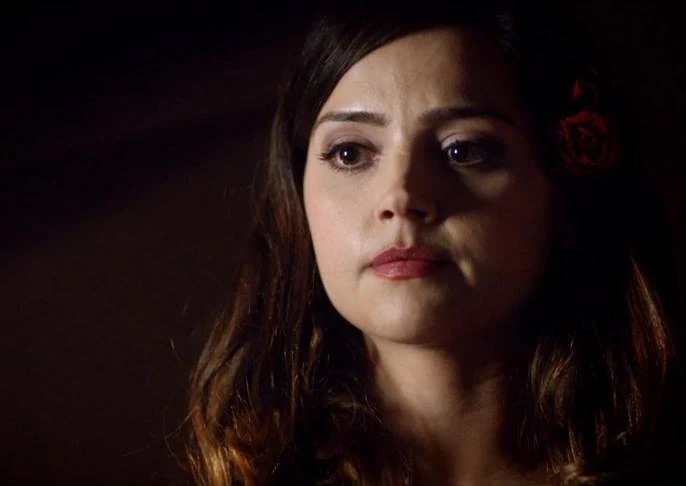 She has created a world in her mind where she is a human because the reality was too horrible for her to deal with. Both of these subplots are not just part of this episode as Amy and Rory will appear in future episodes and the actress who played Oswin (Jenna-Louise Coleman) has been confirmed to appear as The Doctor's companion in the Christmas special. Asylum of the Daleks is a one-off episode but is part of an ongoing drama serial. Some elements of the episode will be seen in later episodes, for example The Doctor, Amy and Rory. However the plot of this episode does not directly relate to any other episode and is a completely one-off story in an ongoing drama serial.
Representation

The Doctor is represented as an outsider, his odd dress sense and the way he speaks is intended to show that he is not one of us. He is also represented as being highly intelligent and capable of many things that most humans wouldn't be because of his intelligence and his sonic screwdriver. He often shows a childlike side and has funny interactions with other characters, however he does have a darker side and is capable of showing anger. This is because he has been fighting aliens such as the Daleks for hundreds of years. The companions, Amy and Rory, allow the audience to experience the adventure and understand what is happening because they give a reason for The Doctor to explain things.
 Amy is represented as being feisty, strong and independent. This is shown by having her dresses in black leather. There is also a photoshoot scene where there are a lot of close-up shots of Amy. This shows that Amy is very sexy. She is also shown to love Rory very much and finds it hard that they are filing for divorce. However she tries to hide these feelings and keep to her feisty persona. The divorce is a big sub-plot of the episode so these feelings are very important.
 Rory is represented as being a bit of a comic relief at some points during the episode. Some of the lines that he says are intended to be funny and possibly make him seem unimportant. However he is shown to be a very valuable companion to The Doctor. He is represented as being very much in love with Amy, despite the fact that they are in the process of getting divorced.
 Mise en scene
As Doctor Who is a sci-fi programme, most episodes take place on different planets. Towards the beginning of the episode, The Doctor finds himself on Skaro. The sky is red which clearly tells the audience that this is an alien planet. As mentioned before, The Doctor's outfit is meant to be uncool but The Doctor thinks that it is cool which shows that he is an outsider (alien). When the Daleks blow up, there is a large explosion which would originally have been created using pyrotechnics and then expanded through SFX. When The Doctor, Amy and Rory are being sent to the asylum, the beam would have been created entirely using SFX however the actors may have been filmed using green screens. In the parliament of the Daleks, there would likely have been a few Daleks on camera and then they would have been duplicated in post-production.
Sound

The music gets faster paced to indicate danger or something dramatic, this gives the audience prior knowledge of the event and therefore creates tension for them. Some sounds heard in the episode, such as the banging on the sides of the ship would have been added in in post-production however it does relate to what is happening in the shot therefore it is diegetic sound. These would have been put in post-production so the sound will not get
Titles

The opening credits of Doctor Who are created entirely through CGI. The episode title and names of the three main actors are shown over a sequence of the tardis travelling through the time vortex. The opening sequence is quite fast paced because the names of the three main actors and the name of the show fade in and then fade out again. During the closing credits, the character names appear first but the actors names are larger. This is because the audience are more likely to know the character name so they can identify the actor they want because the character name is shown first.
Camerawork and Editing

The transition between shots differs depending on the effect that the crew want to create. When something dramatic or exciting is happening, there are quick cuts and when there is little action the shots are slower and more spaced out. A variety of shot types are used in the episode, for example long shots. These are used to allow the audience to see more in one shot than they would with a close-up shot or a medium shot. Close-ups are used to show the reaction of a character and to make sure that the audience are focused on the character. The camera pans around all of the Daleks to emphasise how many of them there is. High Angle shots are often used to show lack of power. An example of this is when Rory is falling towards the Dalek Asylum. This shows that at that point he is not very powerful and is also probably worried or afraid. If there is an action scene then the camera is often handheld and shaky and there are quick cuts between shots. However when there is a calmer scene such as Amy seeing the Daleks as people the camera is more steady and there is slower movement. Some of these shots would have been slowed down in post-production. All of these things happening together create the sense of hallucinating. Abrupt cuts between shots can be used to show that a shift in time or place has occured. This is shown when there is a cut from The Doctor being captured on Skaro to Amy being captured on Earth.
Genre
Doctor Who is clearly a Sci-Fi programme. The inclusion of space and time travel, spaceships, life forms from other planets and advanced technology such as the forcefield or the Doctor's sonic screwdriver all point towards the Sci-Fi genre.
Target Audience
Doctor Who is a family show with various elements that would appeal to people of different ages. The lack of swearing and the fact that most of the violence is only implied means that children can watch and enjoy the show. Teenagers and adults can enjoy the very subtle, more mature jokes and the sex appeal of some of the characters (most often this is the companion and in this episode Oswin Oswald as well). There are also emotionally driven storylines which they can see carrying on throughout a series.
The One Show Analysis

 The One Show has three presenters, Matt Baker, Alex Jones and Chris Evans who joins Alex Jones on Fridays. They usually wear clothing that could be considered to be smart casual, which gives the show a more friendly feeling. The number of guests can change from episode to episode. They also usually wear casual clothing although they often come across as being more formal. Both presenters and guests speak in a fairly 'chatty' manner which means that the audience do not feel like outsiders and can take in any information easily. In this particular episode the show was presented by Chris Evans and Alex Jones and the guests were Karen Gillan and Peter White.
 As previously mentioned, the clothing of the guests and presenters is fairly casual which makes the show seem more natural. As the interview is live, there are not an excessive use of special effects. However there is some use of special effects on screen such as the graphics which show the viewer The One Show website, postal addresses, phone numbers to call or text in to the show. There is a musical soundtrack over some of the packages but this is very quiet so the audience can hear the people talking in the package. Voice-overs are also used to narrate to the audience what is happening on screen.
When an interview is taking place, an over-the-shoulder shot is used. This allows the audience to see the interviewer but also allows the interviewee to still be the main focus of the shot. One of the people being interviewed was in a wheelchair so the camera was placed on the floor looking up at him, this is a very empowering shot of him. Close-up shots are used when someone is talking so that the audience are focused on them and what they are saying. The show starts with a long shot of the hosts and then the camera moves towards them and focuses on them because they are the main part of the show at this point. During the interviews, the main transitions are between the hosts and interviewees. Usually the camera cuts or pans to a close-up of the person who is talking. There are more transitions in the packages because the reporters often move to different places which makes cuts necessary. Cuts are quite far apart because each section of the package often last a couple of minutes at least. There are some minor transitions during the packages but nowhere near as much as other genres of programmes.
Monday, 17 September 2012
TV Job Functions
Stunt Coordinator: A stunt coordinator is responsible for overseeing all aspects of stunts including casting and choreography. The coordinator may work with actors and directors to design and implement stunt scenes.
Assistant Director: The role of an Assistant director include tracking daily progress against the filming production schedule, arranging logistics, preparing daily call sheets, checking cast and crew, maintaining order on the set.
- The First Assistant Director (First or 1st AD) has overall AD responsibilities and supervises the Second AD. The "first" is directly responsible to the director and "runs" the floor or set. The 1st AD and the unit production manager are two of the highest "below the line" technical roles in filmmaking (as opposed to creative or "above the line" roles) and so, in this strict sense, the role of 1AD is non-creative.
- The Second Assistant Director (Second or 2AD) creates the daily call sheets from the production schedule,[citation needed] in cooperation with the production coordinator. The "second" also serves as the "backstage manager", liaising with actors, putting cast through make-up and wardrobe, which relieves the "first" of these duties. Supervision of the second second assistant director, third assistant director, assistant director trainees, and the setting of background (extras) are parts of the "second's" duties.
- The Second Second Assistant Director (Second Second or 22AD) deals with the increased workload of a large or complicated production. For example, a production with a large number of cast may require the division of the aspects of backstage manager and the call sheet production work to two separate people.
- The Third Assistant Director (Third or 3rd AD) works on set with the "First" and may liaise with the "Second" to move actors from base camp (the area containing the production, cast, and hair and makeup trailers), organize crowd scenes, and supervise one or more production assistants (PA). There is sometimes no clear distinction between a 2AD and a 3AD. Although some industry bodies (American DGA) have defined the roles in an objective way, others believe it to be a subjective distinction.
- The Additional Assistant Director (AAD or Additional) or Fourth Assistant Director
(4AD or "Fourth") or "Key Production Assistant!" (Key PA) may have a
number of duties. Most commonly, the AAD has two broad job functions.
One is the contraction of the duties of an AD where the AD acts as both
2nd AD and 3rd AD simultaneously. For example, a production with a large
number of cast may pass the 2AD call sheet production work to that of
the AAD, especially when the 2AD is already performing the additional
work of a 3rd AD. The other main use of an AAD is as an adjunct to the
3AD and 1AD for logistically large scenes where more ADs are needed to
control large numbers of extras. The "Additional" may also serve where
the complexity of the scene or specialized elements within it (stunts,
period work) require or are best served by a dedicated AD in most
respects equal to a 1st AD - directing and controlling a number of other
ADs to direct action to the satisfaction of the 1AD and the director.
Location Manager: The location manager is responsible for the finding and securing locations to be used and coordinating the logistics involved for the production to successfully complete its necessary work
Production Assistant: The job of a Production Assistant can vary depending on the budget and specific requirements of a production. They can often be attached to a a particular actor or filmmaker
Script Editor: A Script Editor is a member of the production team of scripted television programmes, usually dramas and comedies. Their responsibilities include finding new script writers, developing storyline and series ideas with writers, ensuring that scripts are suitable for production. They will work closely with the writer at each draft of the script, giving feedback on the quality of the work and suggesting improvements. Also they make sure that practical issues like show continuity and correct running time are adhered to.
Camera Operator: The camera operator is responsible for physically operating the camera and maintaining composition and camera angles throughout a given scene or shot. In narrative filmmaking, the camera operator will collaborate with the director, director of photography, actors and crew to make technical and creative decisions.In filmmaking, the leading camera operator is usually called a cinematographer.
Focus Puller: A focus puller, or 1st assistant camera, is a member of a film crew’s camera department whose primary responsibility is to maintain image sharpness on whatever subject or action is being filmed.
Grip: In the U.S. and Canada, grips are lighting and rigging technicians in the filmmaking and video production industries. In the UK, Australia and most parts of Europe, grips are not involved in lighting. In the "British System", adopted throughout Europe and the British Commonwealth (excluding Canada), a grip is solely responsible for camera mounting and support.
Set Dresser: Set dressers arrange objects on a film set before shooting. They work under the direction of a leadman, a set decorator and a production designer. Set dressers place furniture, hang pictures, and put out decorative items. They are also responsible for some light construction and assembly of small items, such as air-conditioning ducts. They also move items as necessary to make room for the filming equipment. During the shoot, the prop department works with an on-set dresser to ensure that the props and furnishing are in the proper location for the script and to maintain continuity, as scenes are often shot out of order.
Graphic Designer: A graphic designer is a professional within the graphic design and graphic arts industry who assembles together images, typography or motion graphics to create a piece of design.
Dubbing Mixer: A re-recording mixer, formerly known as a dubbing mixer, is a person who is part of a post-production sound team and works specifically with dialog, music and sound effects to create the final soundtrack for a production. They are responsible for ensuring that the sound in a record single, film or television program is technically correct, and as near to the director's or sound designer's original idea.
Foley Editor: Foley is the reproduction of everyday sound effects which are added in post production to enhance the quality of audio for films, television, video, video games and radio. Foley artists look to recreate the realistic ambient sounds that the film portrays.
ADR Editor: Automated Dialogue Replacement or Additional Dialogue Recording is the process of adding in audio of an actor or actress after the original filming. This can happen because of accompanying noise from the set, equipment, traffic, wind, and the overall ambiance of the surrounding environment resulting in unusable production sound.
Doctor Who Spinoffs
Doctor Who Spinoffs/Websites
The series originally ran from 1963 to 1989. There was an unsuccessful attempt to revive the series with a television film. However the series was finally relaunched in 2005 by Russell T Davies. Throughout it's original run and the relaunched series, Doctor Who has spawned many spin-offs. For example Torchwood, which is aimed at an older audience than Doctor Who. Torchwood features the character of Captain Jack Harkness, portrayed by John Barrowman who was originally introduced in the Doctor Who episode 'The Empty Child. Torchwood has so far had four series, most recently 'Miracle Day'. Another spin-off from Doctor Who is The Sarah Jane Adventures which features Sarah Jane Smith, played by Elisabeth Sladen, who was the companion of both the third and fourth doctors and also appeared in an episode of the relaunched series. The Sarah Jane Adventures ran for four full series and a fith series was produced and three episodes broadcast before Elisabeth Sladen sadly passed away. It has been stated that there will not be any more episodes of The Sarah Jane Adventure. Other television spinoffs include Doctor Who: The Infinite Quest, Tardisodes and Totally Doctor Who.
Some websites that relate to Doctor Who are:
www.bbc.co.uk/doctorwho
www.thedoctorwhosite.co.uk
www.drwho-online.co.uk
www.whoisdoctorwho.co.uk
www.thedoctorwhopodcast.com
www.drwhocast.com
There is also the Doctor Who magazine, Doctor Who Radio Shows and Doctor Who books and Doctor Who action figures.
Furthermore, there has been lots of Doctor Who merchandise such as board games, card games, game books and computer games.
Board Games
Dodge the Daleks
The Dalek Oracle
The Dalek Shooting Game
Daleks: The Great Escape
Doctor Who
The Planet of Monsters
War Of The Daleks
The Game Of Time And Space
The Doctor Who Role Playing Game: 1st Edition
The Doctor Who Role Playing Game: 2nd Edition
Battle For The Universe
Chess Set
Invasion Earth
The Interactive Electronic Board Game
Test Your Trivia
The Time Travelling Action Game
Operation
Doctor Who & The Dalek
The Time Travelling Game
Three In One
The Dalek Battle Through Time
The Facts and Trivia Board Game
Exterminate Wire Buzz
Scene It?
The Time Wars Game
Battle To Save The Universe
Card Games
The Doctor Who Collectible Card Game
Battles In Time
Alien Armies
Monster Invasion
Doctor Who Game Books
Computer Games
Doctor Who: The First Adventure
The Key To Time
Doctor Who and the Warlord
Doctor Who and the Mines of Terror
Pinball
Dalek Attack
Destiny of the Doctors
Top Trumps
The Adventure Games
Evacuation Earth/ Return To Earth
The Mazes of Times
Subscribe to:
Posts (Atom)